Ever wonder why you keep so many cups? Most people don’t think twice about their cups. If you think you have too many, you may have an overly emotional attachment to your cups.
They accumulate slowly. A mug from a vacation. One with a quote that felt true at the time. A gift that made someone think of you. A few extras because they were pretty, or on sale, or promised a version of morning that felt calmer than the one you were living.
Before long, the cabinet is full. Overflowing, even.
Not in a dramatic way (yet). Not chaotic. Just… crowded.
And yet, when someone opens it, something subtle happens.
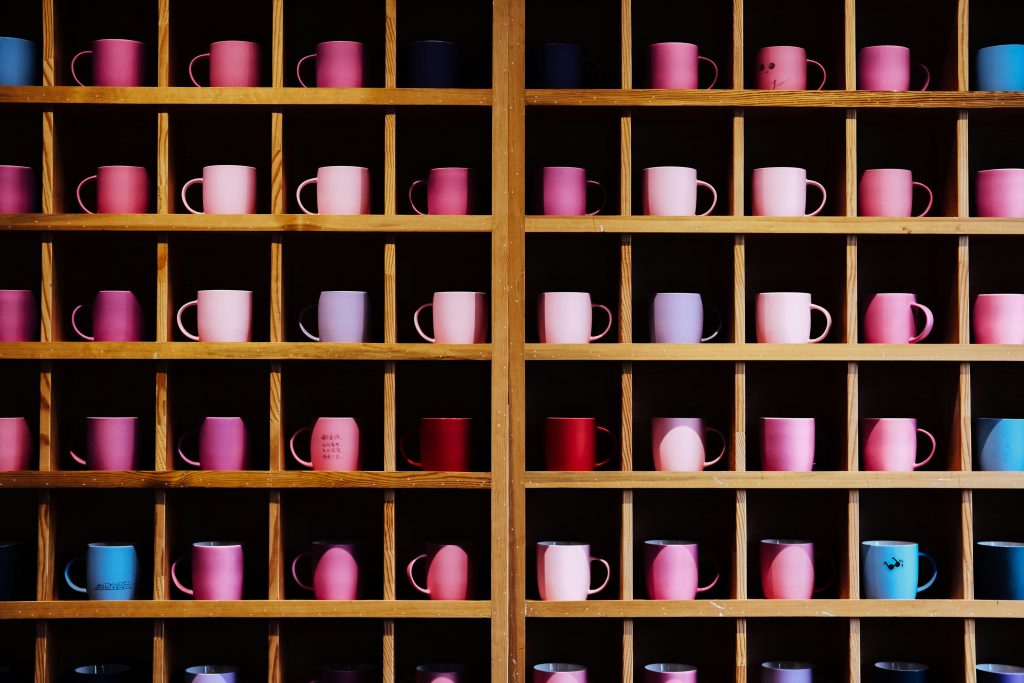
When Objects Become Introduction
Cups are rarely neutral. They’re displayed. Reached for. Commented on.
People notice them when they visit. They notice the one in your hand when you take your morning coffee with you. They make quiet assumptions about the person who owns them. Remember the Stanley™ craze? How many of your friends commented on it when you got yours?
I know I heard all about mine when I first took it to work. Yes, I bowed to the peer pressure to fit in. I’m still ashamed.
People look at the cup in your hand and think:
You must love coffee.
You’re sentimental.
You’re quirky.
You are cozy.
You’re intentional.
A cup collection becomes shorthand for who you are.
And over time, it can become something that you feel responsible to maintain.
The Unspoken Pressure to Match the Image
At some point, the collection stops being about function.
You don’t need twelve mugs. You don’t even drink out of half of them. Some don’t even feel good in your hand. Others leak. Some are dented and ugly.
But getting rid of them feels..
Uncomfortable.
Not because you’ll miss the cups.
Because you’ll miss what they say.
They signal warmth. Personality. Hospitality. A certain kind of person.
Letting go of them can feel like flattening your identity, like becoming less interesting, less generous, less yourself.
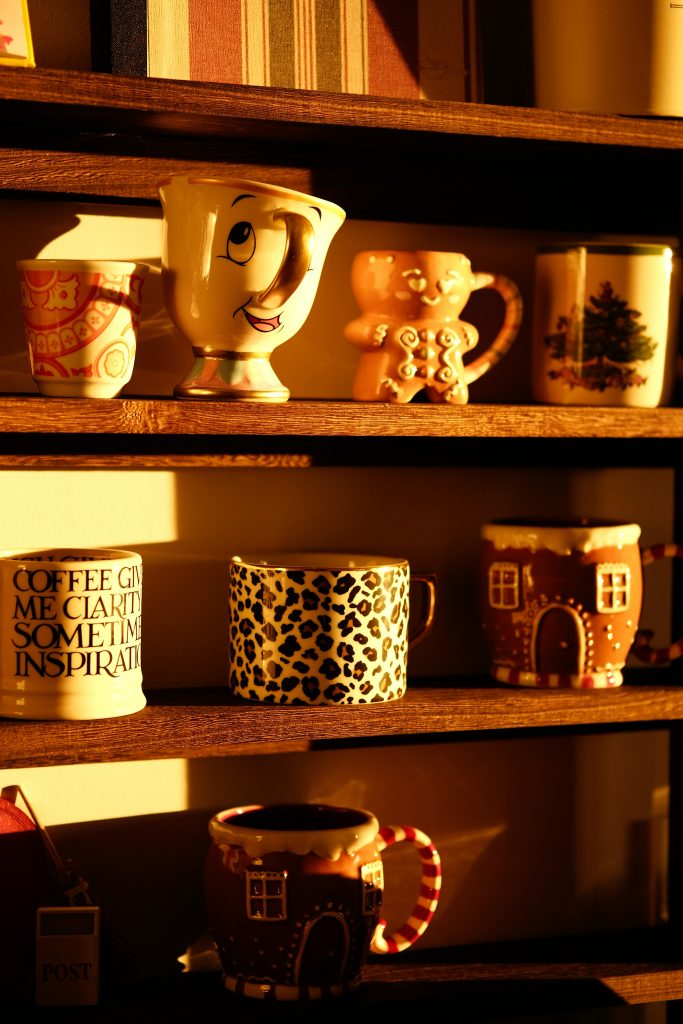
When Identity Lives in the Cabinet
This is a small example of something much larger.
When objects begin to represent how we want to be perceived, they stop being optional. They become performative.
The cup collection becomes proof:
- That you’re a “coffee person”
- That you’re thoughtful
- That you are someone who cares, who notices details
Even if none of that requires the cups anymore.
The identity has been acquired. The objects are just holding it.
Why This Isn’t About Minimalism
This isn’t an argument for having fewer cups.
It’s an invitation to notice why they feel necessary.
Minimalism asks, “How many do you need?“
Internal order asks, “What role are these playing in my life?“
If the cups are bringing daily joy and ease, they are doing their job.
If they aren’t, you need to figure out your emotional attachment to your cups.
Or maybe they are creating quiet pressure, guilt, or a sense of obligation to a version of yourself you’ve outgrown. They may be doing something else entirely.
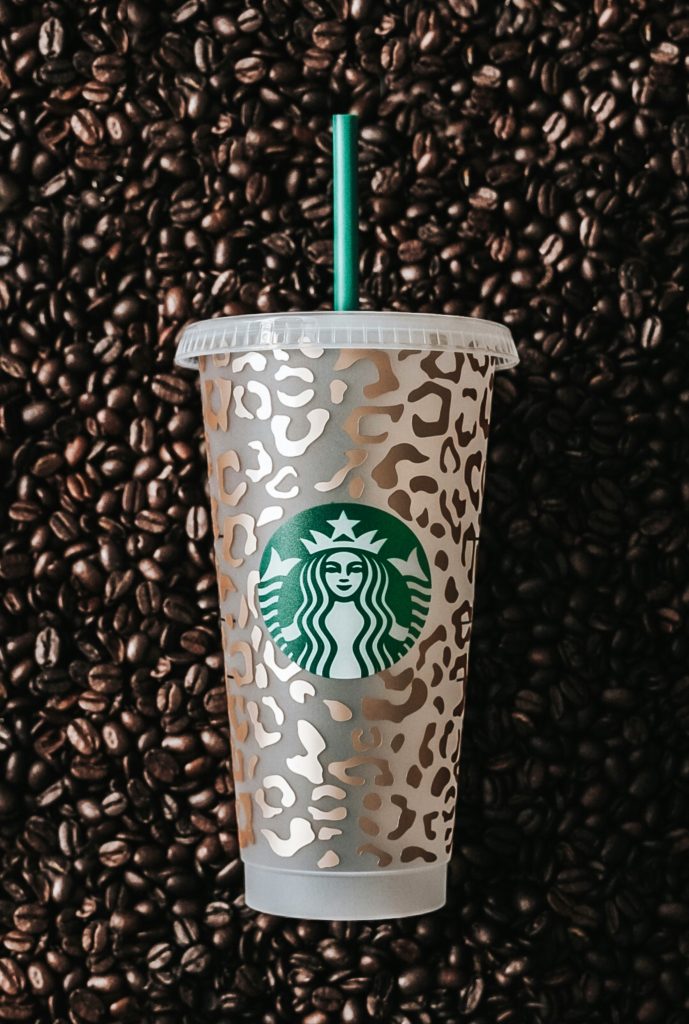
The Moment of Reorientation
There’s a gentle shift that happens when identity moves back inside.
You realize:
- You don’t need objects to signal warmth
- Your personality is not stored in ceramic or dual-walled plastic
- Hospitality isn’t measured by the number of cup options you present
You can be cozy with one mug. Generosity doesn’t require abundance. And you can definitely be yourself without the evidence to prove it.
When that internal clarity settles, decisions become simpler.
Not rushed. Not forced. Just clear.
What Stays When the Performance Ends
Many people find that once the pressure to represent themselves through objects dissolves, what remains feels more honest. The emotional attachment to cups is seen now, and that awareness changes things.
The mugs you actually reach for. The ones that feel good in your hands. The ones that match who you are now, not who you thought you needed to be.
The rest no longer feel like loss. They feel like release.
Order Begins With Permission
The Order Within™ isn’t about purging collections or stripping away personality.
It’s about removing the quiet expectation that your belongings must explain you.
When you no longer need your home to perform your identity, it becomes a place of rest instead of representation.
And that’s when order stops being about what you own and it starts being about how you live.
Sign up below to get on the waitlist for The Order Within™ Method. Waitlist members get special bonuses and special pricing. Sign up now.